

Latest Construction Technology for Buildings in India

Latest Construction Technology for Buildings in India
Technology is transforming the construction industry because the old ways simply can’t keep up with today’s demands. Construction projects are bigger, timelines are tighter, costs are under constant pressure, and clients expect transparency and quality like never before. To survive and grow, the industry needs smarter, faster, and more reliable ways of working—and that’s exactly what technology delivers.
One major reason is efficiency. Digital tools reduce manual work, paperwork, and repetitive tasks that slow projects down. With construction software, mobile apps, and cloud platforms, teams can plan, track, and manage projects in real time. Site engineers, project managers, and office teams stay connected, which cuts delays and miscommunication.
Technology is also improving decision-making. Data from project dashboards, sensors, and reports helps managers spot risks early, control costs, and optimize resources. Instead of guessing or reacting late, teams can make informed decisions based on real-time insights.
India’s Growing Demand for Smart Infrastructure
India is expanding at a breathtaking pace. With urban populations growing and cities becoming more crowded, the demand for faster, safer, and more efficient buildings has skyrocketed. This is where advanced construction technologies are playing a crucial role.
From metro cities to developing towns, modern tools and techniques are reshaping the skyline.
Evolution of Construction Technology in India
Traditional Methods vs Modern Techniques
Construction has long been built on experience, skill, and hands-on execution. Traditional methods rely heavily on paper drawings, manual calculations, site registers, and direct supervision. Decisions are often based on past experience and on-the-spot judgment, which works—but only up to a point. As projects grow in size and complexity, these methods start to show their limits. Information gets scattered, updates are slow, and small mistakes can turn into costly delays.
Modern construction techniques don’t replace experience—they support it with technology. Digital tools like BIM, project management software, and mobile-based reporting help teams stay informed in real time. Instead of chasing files or waiting for updates, managers can see progress, costs, and issues as they happen. This makes coordination smoother between site teams, contractors, and the office.
The biggest difference lies in visibility and control. Traditional methods often react to problems after they occur. Modern techniques help identify risks early—whether it’s a delay, a budget issue, or a resource shortage—so corrective action can be taken sooner. Documentation becomes organized, communication becomes clearer, and accountability improves across the project.
Key Milestones in India’s Construction Innovation
India has seen a rapid transformation in construction over the past decade. Smart city projects, digital planning tools, and prefabricated structures have redefined how buildings are created.
The shift from traditional to tech-driven construction has improved speed, accuracy, and safety.
Building Information Modeling (BIM)
What is BIM and How It Works
Imagine being able to see your building before it is built. That’s exactly what BIM does. Building Information Modeling creates a digital 3D model of a structure before construction begins.
It allows architects, engineers, and contractors to work together in real time
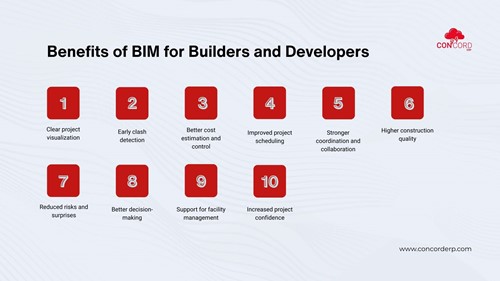
Benefits of BIM for Builders and Developers
- Clear project visualization
3D models help builders and developers understand the complete project before construction starts, reducing confusion and design misunderstandings. - Early clash detection
BIM identifies conflicts between structural, architectural, and MEP elements at the planning stage, minimizing on-site errors and rework. - Better cost estimation and control
Accurate quantity take-offs improve budgeting, reduce material wastage, and prevent unexpected cost overruns. - Improved project scheduling
Construction sequencing becomes more efficient, helping teams plan activities better and meet deadlines with fewer delays. - Stronger coordination and collaboration
All stakeholders work on a single shared model, improving communication and reducing misalignment between teams. - Higher construction quality
Detailed digital documentation ensures better execution, quality checks, and compliance with standards. - Reduced risks and surprises
Potential issues are identified early, allowing corrective action before they impact time or cost. - Better decision-making
Real-time data and visual insights help developers and project managers make informed decisions quickly. - Support for facility management
BIM models can be used after project completion for maintenance, operations, and future renovations. - Increased project confidence
With better planning, visibility, and control, projects run more smoothly from start to finish.
3D Printing in Construction
How 3D Printed Homes Are Built
3D printing is no longer limited to small objects. In India, entire homes are now being built using large-scale 3D printers. These machines layer concrete to create walls and structures quickly.
Impact on Cost and Time Efficiency
3D printing significantly reduces labor costs and construction time. What once took months can now be done in days. It also reduces material wastage, making it environmentally friendly.
Precast and Prefabrication Technology
Faster Construction with Precast Components
Precast construction involves manufacturing building parts in factories and assembling them on-site. Think of it like putting together a puzzle.
Role in Affordable Housing Projects
This method is widely used in affordable housing projects across India. It speeds up construction and ensures consistent quality.
Green Building Technology
Sustainable Materials and Energy Efficiency
Green buildings use eco-friendly materials, solar panels, and efficient water systems. These buildings reduce environmental impact and save energy.
Government Initiatives for Eco-Friendly Buildings
The Indian government is promoting sustainable construction through policies and incentives. Green building certifications are becoming more popular.
Smart Buildings and IoT Integration
Automation in Modern Buildings
With IoT integration, building operations no longer rely on manual control. Lighting can adjust based on occupancy, temperature systems can respond to weather conditions, and security systems can monitor activity in real time. Most of these functions can be controlled easily through a smartphone or centralized dashboard, giving users greater convenience and control.
Energy Management and Security Systems
Smart energy systems help reduce power consumption by ensuring electricity is used only where and when it is needed. This lowers utility costs and supports sustainable building practices. At the same time, smart security features like sensors, cameras, and access control systems improve safety by providing constant monitoring and quick alerts in case of any unusual activity.
Drones in Construction
Site Monitoring and Safety Enhancements
By capturing high-quality images and videos, drones allow project managers to track work progress, identify delays, and spot potential issues early. They also improve site safety by reducing the need for workers to access risky or hard-to-reach areas. Regular drone inspections help ensure safety standards are being followed while keeping teams informed.
Surveying and Data Collection
Drones are widely used for land surveying and site mapping. They can quickly collect accurate data on terrain, boundaries, and elevations—tasks that traditionally took days or weeks. This saves time, reduces manual effort, and helps teams plan and execute projects more efficiently.
Overall, drones make construction sites safer, more transparent, and easier to manage by providing fast, reliable, and visual data.
Artificial Intelligence in Construction
AI for Project Planning and Risk Management
AI helps predict project risks and plan resources efficiently. It can analyze data and suggest better solutions.
Predictive Maintenance and Quality Control
AI tools can detect potential issues before they become serious problems. This improves quality and reduces repair costs.
Robotics in Construction
Automated Bricklaying and Machinery
Robots are now capable of laying bricks, mixing concrete, and even painting walls. This reduces human effort and increases speed.
Improving Worker Productivity
Robotics helps workers focus on skilled tasks while machines handle repetitive work.
Advanced Construction Materials
Self-Healing Concrete
This innovative material can repair its own cracks. It increases the lifespan of buildings and reduces maintenance costs.
Lightweight and High-Strength Materials
Modern materials are stronger, lighter, and more durable. They help build taller and safer structures.
Modular Construction
What is Modular Building?
Modular construction involves building sections of a structure in a factory and assembling them on-site.
Benefits for Urban Development
This method is fast, cost-effective, and perfect for urban housing projects.
Role of Digital Project Management Tools
Cloud-Based Collaboration
Teams can now collaborate from different locations using cloud-based platforms. This improves communication and coordination.
Real-Time Tracking and Reporting
Project managers can track progress, expenses, and resources in real time. It ensures transparency and efficiency.
Government Support for Construction Technology
Smart Cities Mission
India’s Smart Cities Mission is encouraging the use of modern construction technology. Cities are becoming more connected and efficient.
Digital India and Infrastructure Growth
Digital transformation is playing a key role in infrastructure development across the country.
Challenges in Adopting New Technologies
Cost and Skill Barriers
Advanced technology requires investment and skilled workers. Not all companies are ready to make this shift.
Resistance to Change
Some builders still prefer traditional methods. Changing mindsets takes time.
Future of Construction Technology in India
What to Expect by 2030
By 2030, construction in India is expected to become faster, more precise, and more efficient. Automation, artificial intelligence, and digital project management tools will be widely adopted to handle planning, scheduling, cost control, and site monitoring. Tasks that once depended heavily on manual effort will increasingly be supported by smart systems, helping reduce delays, errors, and cost overruns.
Innovation and Sustainability Trends
The future of construction will strongly focus on sustainability. Eco-friendly materials, energy-efficient designs, and green building practices will become standard rather than optional. Digital planning tools like BIM, smart building systems, and data-driven decision-making will support the development of intelligent infrastructure, including smart cities, modern transportation networks, and sustainable housing.
Best Construction ERP Software in India
Importance of ERP in Construction Technology
As construction becomes more advanced, managing projects manually becomes nearly impossible. That’s where ERP software comes in. It connects planning, finance, materials, and workforce into one system.
ERP acts like the brain of a construction company. It keeps everything organized and efficient.
How Concord ERP Supports Modern Construction
Concord ERP stands out as a premier software solution designed for the construction industry and is regarded as the best construction management ERP software in India. It effectively lowers operational expenses and optimizes workflows, facilitating smoother project management. By consolidating various business functions into a unified platform, it fosters seamless collaboration, offers real-time data insights, and enhances decision-making processes.
This cutting-edge ERP system drives productivity, minimizes risks, and elevates overall operational efficiency. For construction companies seeking growth and operational excellence, Concord ERP is an indispensable asset. Simplify Construction Management with Concord ERP: Effortlessly oversee BOQs, Tasks, Progress Tracking, Billing, and Approvals!
Conclusion
Construction in India is entering a new era. From AI and robotics to smart buildings and green materials, technology is changing everything. Projects are becoming faster, safer, and more efficient.
Companies that adopt these innovations will lead the future. And with the right tools like advanced ERP systems, managing complex projects becomes much easier.
The construction industry is no longer just about building structures. It’s about building smarter, faster, and better.
 Any questions? Feel free to contact us.